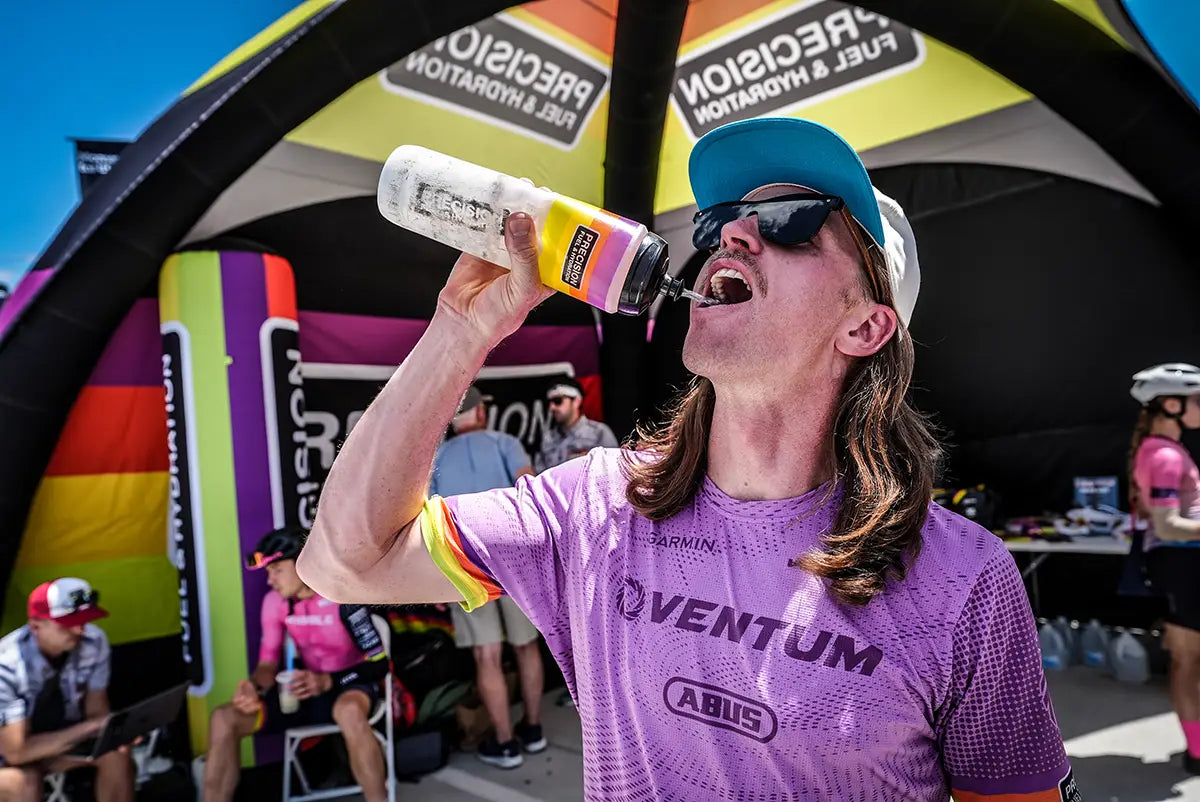
Hybrid event hydration

Plan the drinks you can actually take

A hybrid event mixes running, loaded work, warm indoor air and short transitions into one hard hour or more. That can make hydration feel more complicated than it needs to be. Start with the venue, likely duration, your own sweat evidence and the exact points where drinking is allowed. You don't need a rigid bottle target. You need a small, rehearsed sequence that keeps fluid available without asking you to swallow while you're breathing, bracing or gripping hard.

Hybrid athlete reviewing sweat and fluid needs after a hard indoor session

The short answer

Start comfortably hydrated, then drink to a plan you've tested

Updated 31 July 202614 minute guide

Use a representative rehearsal to estimate a sensible fluid range, then make it fit the current organiser rules and the drink access you'll really have. A short event in a cool venue may need only a few deliberate sips, or no in-race drink at all. A longer, hotter or multi-race day may need a clearer plan. Don't try to replace every gram of sweat during the event, don't finish heavier than you started and don't assume sodium makes overdrinking safe. Practice the bottle, concentration and timing at hybrid intensity before event day.

Six hydration decisions

Build a drink plan that fits the day

Start with the venue and rules, add what you've learned in rehearsal, then decide where drinking is safe and what happens after the finish. Choose the bottle after you've worked out the plan.

Map the event

Map the venue before you fill the bottle

Hybrid hydration starts as a logistics problem. Running lifts your breathing rate; sleds, carries and lunges make swallowing or gripping awkward; the Roxzone may be your only reliable water; and a warm hall can make a familiar effort feel unexpectedly hard.

Draw one line from warm-up to finish. Mark the start pen, every legal aid opportunity, the stations either side of it, toilet access, where a personal bottle can stay and how long it will take to reach after the line. Add one fallback for a queue, a missed cup or a warmer-than-expected hall. There's little value in calculating a volume you can't use safely.

Clock

Count the time before and after the race too

Include the warm-up, start pen, expected race time and any second effort later in the day. A 62-minute race can still become a much longer hydration problem if you're moving in a warm venue for forty minutes beforehand, then can't reach a bottle until well after the line.


Venue

A winter forecast won't tell you how the hall feels

Lighting, still air, crowded warm-up areas, spectator density and limited cooling can all add to the heat indoors. Record how your closest training venue actually felt. Assuming an indoor event will be cool is an easy mistake to make.

Rules

Know where the rules let you drink

The current HYROX Singles rules state that water is available at least once during, before or after each pass through the Roxzone. A drink from anyone outside official aid counts as outside assistance. Layouts and rules can change, so check the current rulebook, athlete guide and briefing rather than relying on what happened at last season's venue.

Athlete

Your training partner's bottle isn't your target

Sweat rate varies a great deal between athletes, and for the same athlete when intensity, clothing, heat acclimation or conditions change. Use your body size, your own repeatable evidence, thirst, symptoms and access. Get qualified advice when a medical condition or medication affects fluid balance.

Hybrid athlete moving through a functional fitness venue
Map the legal, calm drinking opportunities before deciding what the bottle should contain.

Event map

What sort of hydration day are you planning for?

Use these scenarios to organise the decision, not to prescribe a universal volume. Fluid need changes with the athlete, work rate, heat, clothing, acclimation and access to a drink. Short doesn't always mean cool, and a modest race can turn into a demanding day once you add travel, the warm-up or a second effort.

Use the closest representative rehearsal, then leave room for thirst, weather and event flow.
ScenarioMain hydration jobStarting actionAvoidNext decision
Short, cool single effortArrive normally hydrated and avoid unnecessary complexityUse thirst and legal water access; in-race intake may be minimalForcing a bottle target copied from long endurance sportProtect the warm-up and post-finish drink
Typical single race in a warm hallLimit avoidable deficit without drinking under uncontrolled breathingPlan one or two calm aid windows and rehearse cup handlingChasing fluid at every pass regardless of thirst or comfortCompare body-mass change and symptoms after a simulation
Longer format or high sweat lossUse a personal fluid range and keep fuel concentration visibleSeparate water from carbohydrate when the two needs divergeTrying to replace every gram of sweat during the raceCheck concentration, sodium context and carrying rules
Doubles, relay or two-race dayUse the recovery gap without creating a heavy stomachSip a measured familiar drink and use food when the gap allowsOne large catch-up volume immediately before the next warm-upWrite bottle ownership, handover and toilet timing
Heat, illness or medical contextPrioritise safety and individual advice over a generic targetAdjust warm-up, cooling and fluid only within rehearsed boundariesTreating confusion, collapse or repeated vomiting as dehydration to self-treatUse event medical help and qualified clinical guidance

On a phone, swipe the table sideways. Verify the current organiser rules and athlete guide before relying on a bottle, cup or aid point.

Start normally hydrated

Take the panic out of the final hour

A good starting plan should feel almost forgettable. Normal meals and drinks spread across the day do most of the work. The final hour is there to cover an unusual travel delay, a warm venue or a long start process. Trying to catch up quickly can leave you with more urine, a heavy stomach and extra nerves without solving the event.

People with kidney, heart or endocrine conditions, diabetes, a history of exercise-associated hyponatraemia, or medicines that affect fluid or sodium balance need individual clinical advice. This guide can't replace that plan.

Day before

Let ordinary food and drink cover ordinary losses

Most healthy athletes can begin from normal daily eating and drinking rather than a special loading ritual. Spread fluid across the day, include water-rich foods and normal salt in meals, and use thirst as part of the picture. Clear or copious urine all day is not a prize and can signal that intake has become excessive.

Morning check

Use weight, urine and thirst as a pattern

One dark urine sample does not diagnose dehydration, especially after supplements, food or the first void. A repeated pattern of unusual thirst, lower morning body mass and darker urine is more useful. Compare with the athlete's normal baseline and respond gradually rather than trying to correct everything in the final hour.

Travel

Keep the bottle reachable without drinking by habit

Travel, security queues and a hot venue can turn a normal plan into a long gap. Carry a clearly measured familiar drink, know where toilets are and stop automatic sipping once the plan has done its job. The aim is to reach warm-up comfortable and normally hydrated, not with a full stomach and an urgent bladder.

Warm-up

Separate cooling from frantic catch-up

A warm-up raises temperature and sweat before the clock begins. Use shade, lighter layers, airflow and cool familiar drinks where practical. If the venue is much warmer than expected, shorten unnecessary waiting and adjust the plan within rehearsed limits rather than downing a large cold bottle immediately before the start.

Athletes completing a calm pre-event run beside the water
Practice the travel, warm-up and final drink as one sequence.

Measure a useful range

Measure sweat loss without turning it into a drinking order

Sweat testing is useful because losses vary widely. Its limit is that the result belongs to that particular session: sport, intensity, duration, clothing, environment, hydration state and heat acclimation all matter. An easy winter run and a warm indoor race are different experiments.

Use a simple field calculation to estimate whole-body sweat rate, then apply it cautiously. You may replace only part of the loss during the event because absorption and access are limited. Keep the direction in view: a substantial avoidable deficit can add strain, while drinking enough to gain body mass during exercise can raise the risk of exercise-associated hyponatraemia.

Measure

Weigh before and after a representative simulation

Use the same reliable scale, similar clothing and dry off obvious surface sweat. Record pre- and post-session body mass, all drinks taken, any urine passed and the exact exercise time. The result estimates whole-body sweat loss for that session; it is not automatically the amount to drink next time.

Calculate

Correct for the fluid that entered and left

Add drink consumed and subtract any urine from the body-mass loss, using one kilogram as roughly one litre for this practical estimate. Divide by exercise hours. A 0.5 kg loss plus 0.4 L consumed over 75 minutes suggests about 0.72 L per hour of sweat in that rehearsal, not a compulsory 0.72 L per hour drinking target.

Compare

Repeat before calling the number personal

Repeat the method in a second hybrid session with similar intensity, clothing and venue conditions. A large difference asks a question: was the session harder, the hall warmer, the warm-up longer or the measurement less tidy? Use a range from credible sessions instead of giving one noisy test false precision.

Interpret

Keep the lower and upper safety boundaries visible

Use the estimate alongside thirst, comfort, event length and legal access. It can help identify an athlete who loses a lot in warm work or one who was already drinking close to losses. It cannot justify forced full replacement, especially when that would mean weight gain or repeated intake despite nausea and bloating.

Athlete using a bottle while measuring sweat loss in training
A useful sweat test records the session and conditions as carefully as the scale.

Choose drink windows

Choose calm, legal drink windows

The current HYROX Singles and Doubles rulebooks describe official water access around the Roxzone and restrict outside assistance. This isn't a long run where you can reach for a handheld bottle whenever you like. Decide which passes matter, what each drink is doing and whether you can reach a separate bottle before or after the race.

Write the plan in one line: expected windows, approximate portion, drink type and fallback. Keep your hands dry for grip work, don't try to swallow while your breathing is out of control, and never depend on support the current rules don't allow.

Roxzone

Use the official aid without losing the next station

Approach the aid point with the decision already made. If breathing is uncontrolled, slow enough to swallow safely or skip the cup and use the next legal opportunity. A small deliberate drink can be more useful than grabbing water automatically, spilling most of it and starting the next run coughing.

Sequence

Place drinks away from bracing and grip demands

A drink immediately before sled push, farmers carry or wall balls may sit poorly and can leave wet hands at the wrong moment. Test which side of a station works better. The calmest window may be after the heart rate settles on the following run rather than at the first available table.

Cup

Practice the hand skill, not only the drink

Paper and open cups behave differently from a training bottle. Rehearse taking a cup while moving slowly, pinching it if useful, drinking a measured portion and discarding it only where permitted. This is a simple coordination task worth learning before a crowded event.

Fallback

Never double the next drink after a missed window

If a table is congested, a cup is missed or the stomach feels full, return to remaining time, thirst and symptoms. Do not automatically take twice as much at the next pass. The fallback should be written before the start: use the next calm legal window or accept a lower total and review it afterwards.

Water being poured into a measured sports bottle
The drink plan should specify legal windows and a simple fallback.

Heat, sodium and safety

More drink won't fix every heat problem

Heat strain depends on the work, airflow, humidity, clothing, acclimation and your health as well as body water. A crowded indoor venue can limit evaporative cooling even when it's mild outside. Give the warm-up, layers and waiting time as much thought as the drink plan.

Sodium is part of sweat and may belong in a longer, hotter or high-loss plan. It isn't a universal cramp cure, a reason to ignore the product concentration or protection against drinking too much. Keep the safety boundary simple: don't force intake beyond the plan you've rehearsed and don't finish heavier because of in-event drinking.

Heat

Reduce avoidable heat before adding more drink

Use lighter removable layers, airflow, shade before entering the hall, a proportionate warm-up and cool familiar fluid where available. Hydration cannot fully offset excessive heat storage. The IOC heat consensus treats acclimation, cooling, warm-up and clothing as part of the same risk plan.

Sodium

Use concentration and total loss, not sweat marks alone

Visible salt on clothing suggests sodium is present in sweat but does not measure concentration or total loss. Sodium in a drink can support palatability and fluid retention in some longer or high-loss situations, yet it does not prevent hyponatraemia when the athlete overdrinks. Keep the claim modest and the current label visible.

Concentration

Do not turn one bottle into every job

A sports drink may combine fluid, carbohydrate and sodium conveniently. Problems appear when powder is added by guesswork or a high carbohydrate target forces a drink concentration the athlete cannot tolerate. Measure the mix from the current label and separate fuel from fluid when the two needs do not rise together.

Stop

Confusion or collapse is a medical emergency

Stop and seek event medical help for confusion, collapse, seizure, severe breathing difficulty, chest pain, inability to keep fluids down or a marked change in behaviour. Heatstroke and exercise-associated hyponatraemia can overlap with symptoms athletes dismiss as dehydration. Do not respond by forcing more fluid.

Reusable sports bottle prepared for a measured hydration plan
Measure the drink and concentration; do not rely on bottle size as the plan.

Recover for the next effort

Let the next start decide the recovery pace

The finish line changes the problem from access to recovery. If another race, relay leg or long journey follows soon, have a measured drink and familiar food ready before the first start. If the next hard session is tomorrow, ordinary meals and gradual drinking may be all you need. No grand recovery protocol required.

Treat body-mass change as useful context, not an order to replace everything immediately. Appetite, stomach comfort, urine, thirst, heat and the next warm-up all matter. Anyone who is confused, repeatedly vomiting or unable to drink needs event medical care, not a stronger recovery bottle.

Finish

Record the loss before the bottle disappears

If practical, use the same scale soon after finishing, note what was consumed and record whether urine was passed. This turns the event into useful evidence. Do not delay medical attention, cooling or normal organiser flow to collect a perfect number.

Gap

Let the next effort set the urgency

A second race in two hours needs a more deliberate recovery window than an easy day tomorrow. Begin with a familiar measured drink and food that the athlete tolerates, then reassess thirst, stomach comfort and urine. More fluid is not better if it compromises the next warm-up.

Rehydrate

Use food and fluid together when time allows

Post-exercise rehydration comes from drinks and water-rich food, with sodium and carbohydrate sometimes helping retention and wider recovery. A recent systematic review found carbohydrate-electrolyte solutions can improve rehydration compared with water in some settings, while results vary. Choose a palatable option and return to normal meals.

Doubles

Give one person ownership of the shared plan

Partners may race at different sweat rates and spend different time working. Label bottles, agree who carries what outside the race floor, and avoid assuming equal turns require equal fluid. Each athlete should know their own post-finish and next-start sequence.

Hybrid athlete finishing a functional station before recovery
The next start time decides how quickly recovery needs to happen.

Worked example

An 82-minute indoor event, window by window

In this example, a representative 75-minute simulation suggested roughly 0.72 litres per hour of sweat. Official water is available around the Roxzone, small cup portions sit comfortably and no medical condition changes fluid needs. The plan doesn't attempt full sweat replacement. The useful part is the sequence; your volume has to come from your own evidence.

Use a conservative range that fits official access, then review the actual event.
WindowSeparate fuel decisionHydration decisionAvoidCheck
Morning and travelNormal drinks and water-rich food across the routineArrive comfortable, with a measured bottle still availableContinuous sipping or a last-minute litreCheck thirst, usual urine pattern and travel delays
Warm-up and start penKeep the planned fuel decision separateSmall familiar drink only if wanted and rehearsedTrying to correct the whole day in the final hourNotice hall heat and remove unnecessary layers
First planned Roxzone windowNo additional fuel unless the separate plan calls for itTake a small deliberate official-aid portionDrinking while gasping or wetting hands before grip workConfirm the stomach feels settled
Second planned windowUse only the carbohydrate amount you've rehearsedDrink to the written range, thirst and conditionsDoubling after a missed cup or forcing fluid when bloatedUse the fallback and continue safely
Finish to next demandUse familiar food according to the recovery gapRehydrate gradually; include sodium in contextOne large catch-up volume or ignoring medical symptomsRecord body-mass change, intake, symptoms and next start

On a phone, swipe the table sideways. Replace the example with the athlete's own rehearsal, current event rules and qualified advice where needed.

Athlete holding a sports bottle while planning fuel and hydration together

Keep fuel and fluid in the same event map

Build the fuel plan around your drink windows

Add the expected duration, intensity, experience and conditions to get a practical fuel starting point. Then place that carbohydrate around the drink windows above. This stops one bottle being asked to deliver more fuel, fluid or sodium than you've rehearsed.

Choose the product after the plan

Compare electrolytes and bottles

Use the product cards for current price and availability. Read the electrolyte label and bottle capacity before buying. No product replaces organiser rules, representative sweat evidence, a concentration you've tested or individual medical and nutrition advice.

Electrolytes

Compare measured electrolyte options when your plan deliberately includes sodium.

Compare electrolytes

Reusable bottles

Measured bottles for travel, warm-up and the drink you want ready after the finish.

Compare current bottles

Common questions

Hybrid hydration questions

Use these answers as planning boundaries, then check the current organiser rules, measured product label and what happened in a representative rehearsal. Get qualified medical advice where you need it.

How much should I drink during a HYROX or hybrid event?

There is no safe universal volume. Use body-mass change and measured intake from representative sessions to estimate a personal range, then fit it around the current official aid points, thirst, venue heat and stomach comfort. Do not aim to replace every gram of sweat during the race and do not drink enough to gain body mass.

Where can I drink during HYROX?

The current 26/27 HYROX Singles and Doubles rulebooks state that water is available at least once during, before or after each pass through the Roxzone, and that accepting drinks from outside official aid is outside assistance. Check the latest rulebook and event briefing because routes, venue flow and rules can change.

Should I use water, electrolytes or a sports drink?

Start with the job. Water may be enough for a short event when ordinary meals and the pre-start routine cover sodium and fuel. A sports drink can combine carbohydrate, sodium and fluid for longer or hotter work, but the concentration must match the current label and the athlete's plan. Electrolytes do not make overdrinking safe or guarantee cramp prevention.

How do I calculate sweat rate for hybrid training?

Weigh before and after a representative session, record all drinks and any urine, then estimate sweat loss as body-mass loss plus drink consumed minus urine. Divide by exercise hours. Repeat in similar conditions and treat the result as a loss estimate, not an instruction to drink the full amount during an event.

What should I do if I feel dizzy, confused or sick in the heat?

Stop and seek event medical help, particularly for confusion, collapse, seizure, severe breathing difficulty, chest pain, repeated vomiting or a marked change in behaviour. Do not assume every symptom is dehydration and force more fluid. Heat illness and exercise-associated hyponatraemia can require urgent assessment.

Sources and further reading

Evidence and current event rules

RSG used current organiser rules, authoritative sport guidance, NHS safety advice and peer-reviewed reviews and consensus statements. They shape this practical starting point but don't replace individual medical or sports-dietetic advice.

  1. HYROX Singles Rulebook, Season 26/27 HYROX, Current file accessed 31 July 2026

    Current official hydration, nutrition and outside-assistance rules for the singles format. Athletes should also check the event-specific briefing.

  2. HYROX Doubles Rulebook, Season 26/27 HYROX, Current file accessed 31 July 2026

    Current official doubles hydration, nutrition and outside-assistance rules, plus the shared-work format that shapes partner logistics.

  3. Fluid replacement for the physically active National Athletic Trainers' Association, 2017

    Individual fluid planning, representative sweat-rate measurement and the risks of both inadequate intake and overdrinking.

  4. IOC consensus on sport events in the heat British Journal of Sports Medicine, 2023

    Hydration, heat acclimation, warm-up, clothing, cooling and event-level heat-risk management.

  5. Sweating rate and sweat sodium concentration in athletes Sports Medicine review, 2017

    Measurement methods and the large within-athlete and between-athlete variability caused by intensity, environment, clothing and acclimation.

  6. Fluid balance in team-sport athletes Sports Medicine review, 2017

    Repeated high-intensity work, environmental heat, equipment and access as relevant fluid-balance factors in intermittent sport.

  7. Third International Exercise-Associated Hyponatraemia Consensus Clinical Journal of Sport Medicine, 2015

    Overdrinking as the central preventable risk, symptom recognition and the limits of sodium as protection.

  8. Sports drinks Australian Institute of Sport, Accessed 31 July 2026

    Authoritative composition, concentration, fuel-and-fluid context, palatability and appropriate sports-drink use.

  9. Oral rehydration beverages after exercise Journal of Athletic Training systematic review, 2024

    Controlled-trial evidence on carbohydrate-electrolyte solutions for treating exercise-associated dehydration after the effort.

  10. Heat exhaustion and heatstroke NHS, Accessed 31 July 2026

    Current public medical guidance on urgent symptoms, cooling and when immediate help is required.