Trail and ultra fuel

A long day needs a plan you don't have to think about

Aid stations can lighten the load. Your own tested food and drink make the gaps less uncertain. Use both, and build enough flexibility for changing weather, terrain, appetite and tired decisions.

Trail runner taking an energy gel during a long event

The short answer

Use the aid stations. Keep control of the essentials.

Plan around time on feet, climbing, terrain, weather and what the event aid stations actually give you. Carry enough familiar fuel to reach the next dependable stop, then use aid stations and drop bags to save weight and give yourself some variety.

Ready-made fuel packs

Fuel packs for longer trail days

Compare our ready-made trail running bundles by brand. Each pack includes fuel for the main effort and one rehearsal; adjust it around aid stations, carrying space and fluid access. These are based around a six hour effort.

Explore all Fuel Packs

Loading available fuel packs…

Use support without depending on perfect support

Aid stations could be part of your plan

Supported

Let the event take some of the load

Confirmed water, familiar food and dependable drop-bag access can reduce what you carry. Check this year’s event guide rather than trusting an old plan as events often change routes, aid station points and terrain.

Personal

Carry the things you genuinely rely on

Take enough tested fuel to reach the next dependable option, especially when a particular product type or dietary requirement matters. And always carry some contingency in case you can't get what you need at the next aid station.

Contingency

Cover one problem, not every disaster

A spare gel, a different texture or a small planned caffeine reserve can cover a delay or flavour fatigue without turning your running vest into a shop!

When the event runs into the night

Appetite, access and simple tasks can all change

Flavour fatigue

Change the texture before sweetness takes over

Sweet gels can become hard work after several hours. Mix drink, chews, bars and suitable normal food around the effort and what your stomach will accept.

Night running

Make the routine easier in the dark

Set prompts before fatigue builds. Choose wrappers, bottles and storage you can handle with a headtorch, gloves or cold hands.

Caffeine

Use caffeine with a reason

Caffeine can help some athletes, but it may also upset the stomach, increase anxiety or disturb sleep later. Test the dose, timing and total amount in training.

Conditions

The same event can become a different fuelling job in the heat or the cold

Heat

Heat makes fluid and sodium more personal

Do you see salt marks on your clothes after more intense or longer efforts? You may be a heavy sweater. Pay attention to any cramping, you may need to think about your electrolyte intake.

Compare drink mixes

Cold

Keep your fuel easy to reach

Cold can dull thirst and heat appetite. Use warm options where available in the cold, drink at regular intervals in the heat, and keep your fuel handy, especially when under gloves and layers.

Self-supported

Know your Aid Stations

Water capacity, quality and fuel/food access become part of the route itself. Follow the event rules and local safety guidance.

After the finish

Recovery is where the magic happens

Immediate

Start with what you can manage

There’s no prize for forcing the perfect recovery product into an unsettled stomach. Begin with fluid and food you can comfortably keep down and take it from there.

Next day

Let appetite and soreness settle in their own time

Return to regular meals, spread protein across the day and use gentle movement when it leaves you feeling better, not more tired.

Training

Don’t rush the next hard block

Sleep, mood, soreness and how normal life feels can all show whether fatigue is still building.

Read our recovery guide

Compare the options

Match what you carry to the support you’ll get

ScenarioEvent supportWhat you carryMain riskHow to mitigate
Supported 50 kmFrequent aidTested fuel between stationsStarting too hard or fuelling too lateSettle into an early routine, use watch or phone alerts to remind you about fuelling or hydration
Longer ultra with drop bagsAid plus bag accessCore fuel and critical sparesAssuming every bag appears exactly when wantedDuplicate some of your essential fuel
Mountain event with limited aidLonger gapsMore fluid, food and weather marginUnderestimating time on feetPlan by time between points, carry back up fuel
Self-supported long dayNone or informalFood, fluid and water-treatment planAccess failure, terrain change or delaySeparate emergency reserve

On a phone, swipe the table sideways to compare every column.

Shop trail and ultra fuel

Build enough variety for a long day

Compare current gels, chews, drink mixes and bars. Prices and availability come from the live product range.

Gels and chews

Compact carbohydrate for climbs, harder efforts or limited carrying space.

Compare gels and chews

Drink mixes and electrolytes

Combine fluid with carbohydrate, or keep hydration separate when conditions keep changing.

Compare drink mixes

Bars and solid fuel

Useful earlier in a long day when the effort is steady and chewing feels comfortable.

Browse energy bars
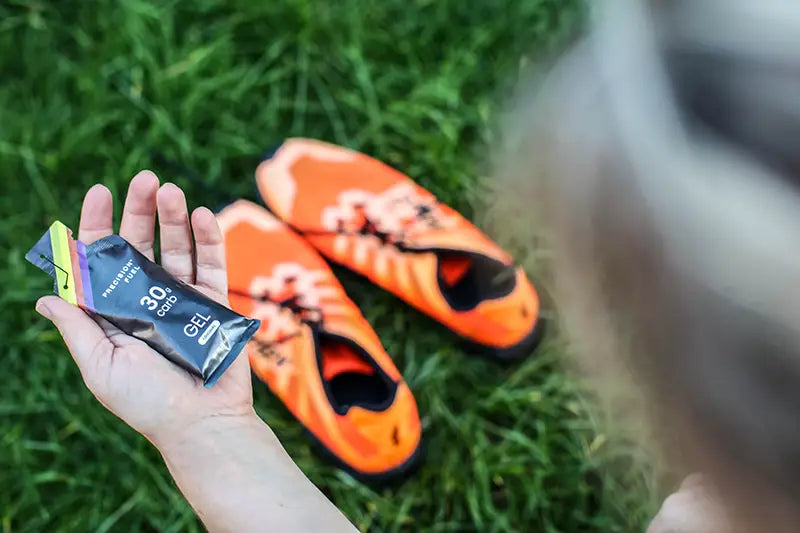
PF30 gel in front of running shoes.

A lot to carry?

Let Fuel Finder build a useful starting point

Add the event, expected duration, conditions, experience and preferences. Fuel Finder will suggest a practical product plan for you to test and adjust on long training days.

  1. Tell us about the event Time on feet, effort, terrain and temperature shape what is practical.
  2. Choose what suits you Pick the fuel types, caffeine preference and event support you expect to use.
  3. Rehearse the long-day routine Use relevant training to adjust quantities, timing, flavour, storage and variety.

Common questions

Trail and ultra fuel questions

General guidance for healthy adults. Your health, experience and event still matter.

Should I carry everything myself?

No. Use dependable event support where it helps, while carrying enough familiar fuel for the gaps, your dietary needs and one sensible backup.

How do I train my gut?

Practice the products and timing during relevant training. Build the demand gradually, and change one thing at a time if nausea, bloating or urgency appears.

When should I use caffeine in an ultra?

There’s no universal timing. Consider your usual intake, sensitivity, event duration and the sleep you still need. Test the plan in training and keep a clear count of the total amount.

Sources and further reading

Where the guidance comes from

We’ve used research and recognised sports guidance to shape the practical advice above. Open the sources when you want the detail behind a recommendation.

  1. Nutritional considerations for single stage ultramarathon Journal of the International Society of Sports Nutrition, 2019

    Position stand covering variety, gut training, fluid, sodium and caffeine in very long races.

  2. Gut training and feeding challenge in endurance exercise Sports Medicine, 2023

    Systematic review showing possible benefits, alongside uncertainty, from repeated race feeding practice.

  3. IOC consensus statement on sport events in the heat British Journal of Sports Medicine, 2023

    Current consensus on heat, hydration, individual sweat losses and sodium.

  4. IOC consensus statement on dietary supplements British Journal of Sports Medicine, 2018

    Explains why products should have a clear job and be trialled before competition.