Hybrid race preparation

Make the important decisions before race day makes them for you

A useful hybrid race plan covers much more than pace. Confirm the rules and start process, let training fatigue fall without going flat, protect sleep and travel, practice the food and fluid, organise your kit and decide what you will do when the day stops following the script.

Hybrid athlete moving through a functional fitness station during an event

The short answer

Write one short plan and practice the decisions that matter

Updated 28 July 202615 minute read

Start with the organiser's current rulebook, technical briefing, division, start time and venue instructions. Work backwards through travel, sleep, familiar meals, fluid access, clothing, shoes, timing equipment, warm up, pacing and the first decision after each station. For doubles or relay racing, agree who does what and which words you will use before fatigue makes communication expensive. Keep the plan short enough to follow under pressure, with a safe alternative for the problems you can reasonably expect.

Ready-made fuel packs

Rehearse the fuel before event week

Use the 2-hour pack only when it matches your expected duration and access, then rehearse the exact products before event week.

Explore all Fuel Packs

Loading available fuel packs…

Six decisions

Build the plan in the order the day could unravel

Settle each decision before polishing the next. The perfect warm up won't help if you have the wrong division, miss check in or have never agreed the doubles handover.

Start with event truth

Turn the current rulebook into a one page map you will actually use

HYROX currently describes eight 1 km runs alternating with eight functional stations in a fixed order, but the authoritative detail still lives in the current rulebook and event briefing. Other hybrid events may use different distances, equipment, penalties, qualification rules and venue flows. Write down the exact version that applies to your entry.

Your event map should show the work order, valid repetition cues, division loads, any station or lane restrictions, check in and start process, aid access, timing chip or wristband requirements, bag policy, emergency contact and the organiser pages you will recheck. If the website, entry email and technical briefing disagree, ask the organiser instead of choosing the version you prefer.

Division

Check your exact category and standards

Confirm singles, doubles, relay, open, pro, adaptive or age group entry as applicable. Record the current loads, repetition standards, run sequence, station order and anything specific to your division. Don't build the plan from a social clip or last season's PDF.

Venue

Use the event page, not a generic checklist

Start times, check in windows, bag rules, warm up access, aid stations, venue doors and travel advice can differ by event. Save the current organiser page offline and decide when you will make the final check for a late update.

Movement

Practice valid work, not something close enough

Practice the range of motion, equipment setup, lane behaviour and completion signal in the current rulebook. A fast invalid repetition adds stress without moving your race forward. Ask the organiser before the event when a movement standard is genuinely unclear.

Safety

Know how to stop and find medical help

Record the emergency contact details, relevant health information and organiser's medical process. Chest pain, fainting, severe breathing difficulty, confusion or a significant acute injury are not pacing problems. Stop and seek event medical support.

Functional training equipment arranged for a hybrid session focused on current rules
Practice the standard on familiar equipment, knowing the venue equipment and layout may feel different.

Countdown framework

Move from building fitness to protecting what you have built

The countdown is a schedule for decisions, not a promise that every athlete needs the same taper. Training age, event duration, recent load, illness, travel and your own response to reduced training all matter.

Settle logistics and practice early enough for race week to become simpler.
WindowMain jobUseful proofCommon trapDecision
Four to six weeksRead rules, identify limiter, confirm travel and entry detailsOne or two representative event sessions with full equipmentUnresolved movement standard or travel riskAsk, book or practice while there is still time to change
Two to three weeksFinal useful specific work and complete food, fluid and kit practicePacing decisions, station exits and doubles handoversChasing a missed block with extra fatigueKeep the priority, remove the least useful volume
Race weekReduce cost, preserve familiar intensity and normal movementShort sessions that finish with confidenceNovel workouts, heavy soreness or equipment experimentsChoose freshness over proof
48 hoursRecheck start time, venue, travel, weather, food access and bagOrdinary meals, steady hydration and a calm scheduleLarge diet changes, forced drinking or late adminUse the rehearsed plan and pack the fallback
Race morningEat, travel, check in, warm up and report to startA timed checklist with generous marginsMaking every choice from memoryFollow the short written sequence

On a phone, swipe the table sideways to compare every column.

Taper without losing the thread

The final week reveals the work; it cannot replace it

A 2023 systematic review found performance benefits across several taper durations when endurance training volume fell while intensity and frequency were broadly maintained. That gives useful direction, not a fixed prescription for every hybrid athlete. The closer you get to the event, the less value there is in training that can't produce a meaningful adaptation before race day.

Stay connected to the movements and speeds that matter, but reduce total repetitions, long conditioning blocks, unnecessary accessory work and any session that reliably creates soreness. If illness, injury or severe fatigue appears, use appropriate medical or coaching advice instead of trying to rescue your confidence with a hard workout.

Volume

Remove the work before you remove the sharpness

Taper research in endurance athletes generally supports reducing training volume while keeping some intensity and frequency. Hybrid athletes still need individual judgement because heavy strength, high-repetition stations and running can leave very different kinds of fatigue.

Strength

Keep the movement familiar and the soreness low

Use loads and exercises that keep your confidence without creating a recovery problem. Race week is a poor time for a new lift, unfamiliar eccentric work or one final test with excessive volume.

Running

Touch race rhythm without trying to prove your fitness

Short controlled efforts can retain coordination and the feel of race pace. Stop while you are still moving well. A hard last-minute simulation can only reveal fitness that already exists, while adding fatigue you did not need.

Readiness

Judge the week, not one nervous session

Compare sleep, appetite, soreness, movement quality, illness symptoms and the warm up with your own normal range. Feeling restless before the race does not automatically mean the taper has failed.

Race numbers ready for a final event preparation check
Use the last week to confirm the plan, then let the fatigue fall.

Protect the ordinary routine

Make travel and sleep pleasantly uneventful

Competition, travel and anxiety can all disturb athlete sleep. The practical goal is not a perfect final night. Build several normal sleep opportunities into the week, keep the room and schedule workable, and remove the late decisions you can prevent. If the start is unusually early or late, practice the timing of waking, food, caffeine and warm up instead of discovering the schedule on race day.

For domestic travel, estimate the whole journey, including parking, walking, check in and venue queues. For long haul travel, use a personalised plan based on direction, time zones, arrival date and the athlete's health. Avoid unfamiliar sleep supplements or sedating medication without appropriate clinical advice.

Sleep

Protect the week, not just the final night

Athlete sleep consensus recommends an individual approach rather than one rigid nightly target. Keep your wake time, light exposure, caffeine decisions and evening routine familiar. One imperfect night does not erase the training block you have completed.

Travel

Remove the delays you can see coming

Book the route, parking or public transport, accommodation and food access early. Keep essential race kit, medication and a familiar snack with you instead of placing every critical item in checked baggage.

Time zone

Give long haul travel a plan of its own

Current travel guidance considers flight timing, light exposure, sleep opportunity, food, fluid and the arrival schedule together. Do not improvise with melatonin or another sleep aid from generic online advice; seek individual medical guidance when needed.

Venue

Leave room for queues, heat and waiting

Indoor arenas can still feel warm, crowded and noisy. Pack a removable layer, simple hearing protection if it helps before the start, and enough time that check in friction does not become your warm up.

Three athletes moving easily together during a calm session before an event
A short, familiar movement session can support your routine without becoming another fitness test.

Food, fluid and access

Practice a plan the venue will actually allow

Build competition nutrition around the athlete's usual diet, the expected event duration and the real opportunities to eat or drink. World Athletics consensus supports a food first foundation, with strategies before, during and between events matched to the competition. AIS guidance treats sports drinks as one convenient way to combine carbohydrate, fluid and electrolytes, not an automatic requirement.

Write down the final substantial meal, optional familiar snack, caffeine decision, available aid points, any carried product the rules allow, approximate fluid approach and the first chance to eat after the finish. Test the sequence in a representative session. If the athlete has diabetes, gastrointestinal disease, kidney or heart disease, takes relevant medication, is pregnant, has a history of disordered eating or needs a clinical hydration plan, use qualified individual advice.

Before

Choose the familiar meal that fits your start time

Use foods you already tolerate before hard mixed training. Work backwards from check in, travel and warm up so you are not rushing the meal or leaving it until hunger and nerves are competing.

During

Plan around duration and the access you really have

Hybrid events may limit where and when you can comfortably drink or take carbohydrate. Confirm the organiser's aid setup and rules, then practice the smallest practical plan that fits the expected duration, intensity and your tolerance.

Fluid

Avoid neglecting fluid or forcing it

Hydration guidance warns that both inadequate replacement and overdrinking can cause problems. Use your training evidence, the conditions, body size, sweat pattern and aid access. Do not chase a universal bottle target.

Supplements

A new product is a risk, not a race-day edge

Do not introduce an untested training stimulant, bicarbonate protocol, gel, electrolyte or recovery product on race day. Athletes covered by antidoping rules remain responsible for substances in their body; UKAD advises assessing the need, risk and consequences, and checking the actual batch when a supplement is used.

Athlete taking a controlled pause between functional fitness efforts
Practice the event plan when breathing, grip and stomach comfort are all under pressure.

Pacing and equipment

Write down what happens between the hard efforts

A useful hybrid pacing plan has more than one target time. It sets the opening restraint, station break rules, how the athlete leaves each station, where the effort may rise and which signals demand a correction. Current pacing evidence does not support one imposed pattern for every endurance event, so use representative training, recent racing and the athlete's strengths to set realistic boundaries.

Pair the pace plan with a short equipment check. Confirm footwear rules, timing chip or wristband, start documentation, clothing for the venue, any legal grip or support items, warm up layer, change of clothes, medication, food and fluid. The organiser's current mandatory or prohibited item list always outranks this example.

First run

Start below the effort the room is asking for

Noise and fresh legs can make the opening pace feel cheap. Use the effort ceiling you practiced and reach the first station ready to meet the movement standard, not simply pleased with your first split.

Stations

Choose a break rule before grip or breathing fails

For work with many repetitions, decide where a planned break may protect valid movement. For carries or sleds, decide which change in posture or speed means you should adjust. One station should not be allowed to borrow too much from every run that follows.

Exits

Use the first part of each run to find yourself again

Practice leaving the station under control, finding your posture and rhythm, then deciding whether the pace can rise. Sprinting every exit can turn eight small decisions into one long slowdown.

Equipment

Pack what you tested, plus one sensible fallback

Use shoes, socks, clothing and nutrition you have already tested together. Carry photo ID, entry evidence, required timing equipment, medication, a warm layer and the organiser's mandatory items. Add a modest repair or replacement option when practical, but leave the rest of the kit cupboard at home.

Athlete maintaining controlled position during a strength movement
The fastest useful repetition still meets the standard and leaves you a workable next step.

Worked checklist

Give race day a simple sequence and enough margin

Replace relative times with the exact clock times for your event. The official check in window and start instructions are still the ones that count.

Keep the final version short enough to read on your phone in a noisy venue.
StageCompleteUseful controlIf it changesResponse
Before leavingStart time, route, ID, entry evidence, kit, medication and food checkedWritten checklistVenue update or travel disruptionUse the saved organiser details and fallback route
Arrival and check-inRegister, attach timing equipment, locate toilets, bag drop, warm-up and start penGenerous time marginLong queue or changed flowProtect check-in first; shorten the extras, not the official deadline
Warm-upRaise temperature, move through key ranges, add brief race-specific touchesFinish ready, not tiredEquipment unavailable or start delayedUse a simple no-equipment version and stay warm
RaceOpening ceiling, valid reps, planned breaks, calm exits and aid decisionsShort cue wordsPenalty, gut issue, hot venue or pace driftAcknowledge, solve the next controllable action and reassess
FinishMedical check if needed, fluid and food access, warm clothing, result and bag collectionOne named meeting pointSeparated team or unexpected symptomsUse the agreed contact point or event medical support

On a phone, swipe the table sideways to compare every column.

Doubles and team execution

Make the handover cheaper than the confusion

A doubles plan should fit on one card: who opens each station, the first planned share, the change cue, who leads the next run, what effort ceiling applies and what happens if one athlete is struggling. Give the athlete doing the work enough freedom to call an earlier handover without starting an argument.

For relays or another team event, record the athlete order, warm up timing, access restrictions, transition rules, meeting points and the person responsible for entry documents and contact. Practice the handover in a noisy session. The exact organiser rules, not this framework, decide who may work, where teammates wait and what counts as a legal exchange.

Rules

Know what you can share and where you must stay together

HYROX doubles rules currently require both athletes to complete the runs together, while functional station work may be divided according to the rulebook. Check the current wording, transition process and any penalties for your event before you divide the workload.

Allocation

Share the work by cost, not pride

Assign stations according to strength, movement economy, grip, running recovery and technical consistency. The strongest athlete at one task may still be the wrong person to take most of it if the next run or station becomes disproportionately expensive.

Language

Agree three short handover cues

Agree words for ready, change and problem. Set a planned repetition or distance target, but let the working athlete call an earlier change. Practice the physical handover and where the resting athlete waits.

Contingency

Decide the response before the problem arrives

Plan for a missed rep, penalty warning, partner pace mismatch, shoe problem, dropped item, gut discomfort and an unexpectedly hot venue. Safety comes before the result; acute medical symptoms need event support, not a tougher cue word.

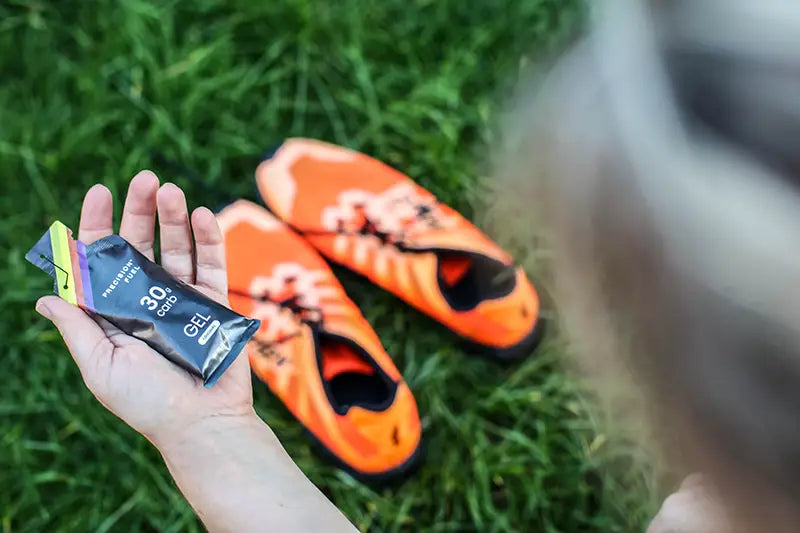
PF30 gel in front of running shoes.

Turn duration into a practical starting point

Use Fuel Finder once you know where eating and drinking can happen

Add the expected duration, intensity, experience and conditions, then compare a practical fuel and hydration starting point. Confirm what the organiser permits, choose only familiar gels, chews or drinks, and practice the plan before race day.

Only after rehearsal

Choose the gel or drink that fits the access you have

Check each product page for current ingredients, choices and availability. Buy it because it fits a plan you have practiced. No product replaces a familiar meal, the organiser's current rules or individual medical and nutrition advice.

Energy gels

<p>Compact carbohydrate for athletes who have already tested the product, timing and fluid pairing in representative training. Read the current ingredients, nutrition, caffeine and allergen details.</p>

Browse energy gels

Energy and hydration drinks

<p>Drink mixes can combine fluid, carbohydrate or electrolytes in different amounts. Match the current label to the plan you have practiced instead of treating every drink as interchangeable.</p>

Browse drink mixes

Common questions

Hybrid race preparation questions

Use these answers as planning boundaries. The current organiser instructions, your health, experience and practice are still the deciding factors.

How long should I taper for a hybrid event?

There isn't a universal duration. Event length, recent training load, soreness from strength training, training age and your previous taper response all matter. Research supports reducing endurance training volume while retaining some intensity and frequency, but the final hybrid plan should also reduce costly station and strength work. Use a coach or qualified practitioner when your response is uncertain.

What should I eat before a hybrid race?

Choose a familiar meal containing carbohydrate that has already worked before hard mixed training, then time it around travel, check in and warm up. The exact amount depends on body size, event duration, appetite, tolerance and the wider diet. Don't copy a bodyweight formula or product stack without practicing it.

Do I need a gel during HYROX or another hybrid event?

Not automatically. Expected duration, intensity, food before the event, aid access, organiser rules and your tolerance decide whether carbohydrate during the event is useful and practical. If a gel is part of your plan, test the exact product, timing and fluid pairing in a representative session.

How should doubles partners split the stations?

First check the current doubles rulebook. Then divide the work according to movement efficiency, strength, grip, running recovery and the cost of the next task. Agree the opening athlete, first planned share, change cue and backup. The athlete working should be able to call an earlier handover when technique or pace falls.

What if I sleep badly the night before?

Keep one imperfect night in proportion. Follow your familiar wake, food, fluid and warm up plan instead of automatically adding extra caffeine or changing the race strategy. If poor sleep is persistent, severe or linked to a health concern, seek qualified advice. Do not drive when dangerously sleepy.

Sources and further reading

Check the evidence and the current organiser rules

Evidence is translated into practical planning rather than individual medical, dietetic or coaching advice. Event rules, venue instructions, product details and health guidance can change; recheck them for the exact athlete and event.

  1. Official HYROX rulebooks HYROX, Current page checked July 2026

    Authoritative landing page for current singles, doubles, relay, adaptive and antidoping documents.

  2. Official HYROX Singles Rulebook HYROX, Current version checked July 2026

    Current official singles sequence, participation, movement standards, event day process and penalties linked from the HYROX rulebook page.

  3. Official HYROX Doubles Rulebook HYROX, Current version checked July 2026

    Current official doubles running, station sharing, transition, participation and event day rules linked from the HYROX rulebook page.

  4. Effects of tapering on performance in endurance athletes PLOS ONE, 2023

    Systematic review and meta analysis used for the direction of taper volume, intensity and frequency guidance.

  5. Sleep and the athlete: expert consensus recommendations British Journal of Sports Medicine, 2021

    Athlete specific sleep risk factors and the case for individualised rather than one universal rule.

  6. Optimizing Athlete Travel for Performance Sports Medicine, 2026

    Current review of travel fatigue, sleep, time zones, light, food, fluid and environmental planning.

  7. Nutrition for Athletics consensus statement World Athletics, 2019

    Food first competition nutrition, energy availability and practical strategies before, during and between events.

  8. Sports drinks: how and when to use them Australian Institute of Sport, Current page checked July 2026

    Authoritative practical guidance on matching carbohydrate, fluid and electrolyte formats to event duration and access.

  9. Fluid replacement for the physically active National Athletic Trainers' Association, 2017

    Position statement covering individual sweat assessment and the risks of both inadequate fluid and overdrinking.

  10. Managing supplement risks UK Anti-Doping, Current page checked July 2026

    Current strict liability, need, risk, consequence and batch testing guidance for athletes.