Endurance race preparation

Make race morning feel familiar before it arrives

Work backwards from the start time. Protect sleep and familiar meals, read the organiser rules, rehearse fuel and hydration, prepare for the course and weather, and give every essential item one known place. The bag matters, but the decisions around it are what keep the morning calm.

Two runners following a coastal trail with the sea beside them

The short answer

Prepare the decisions, then pack around them

Updated 24 July 202613 minute guide

Answer six questions: when and where do you need to be; what do the current organiser rules require; how will you sleep, travel, eat and drink; what does the course ask of you; which equipment failures can you reasonably fix; and what changes if the weather turns? Practice the complete plan in training. Race week is the time to remove choices, not invent a few more.

Ready-made fuel packs

Put the fuel plan in the bag

Compare ready-made 2-, 4- and 6-hour starting points by brand. Each pack includes fuel for the main event and one rehearsal.

Explore all Fuel Packs

Loading available fuel packs…

Use this guide

Put the event into six useful decisions

Go to the part you need now. Before race week, come back and turn the whole guide into one written plan for travel, kit, food, bottles and the start line.

Race week and travel

Sort the fiddly jobs before the final night

Race week is a poor time to discover that registration closes early, the shuttle needed booking or a battery no longer holds charge. Work backwards from the official start time and make every handover visible: travel, registration, food, kit, warm-up and the route to the start.

Competition, travel, stress and anxiety can all disturb sleep. A calm week with enough opportunity to sleep is more useful than demanding perfection from the final night. Keep your usual wind-down where practical, prepare breakfast and clothing before bed, and make the morning simple enough to follow when you are tired.

Seven days out

Find the awkward problem while you can still fix it

Check the kit early enough to replace a worn tyre, faulty zip, leaking flask or damaged cable. Use the final days to confirm what already works, not to squeeze in one last fitness test.

Travel

Write down how you get from the bed to the start

Record parking or transfer details, registration opening times, photo-ID requirements, bag-drop rules, start access and when you need to leave. Save the documents offline if reception may be unreliable, and share the plan with anyone travelling or crewing with you.

Sleep

Protect the week, not one perfect night

Competition nerves, an early alarm or unfamiliar accommodation may disturb the final night. Keep a consistent opportunity for sleep across the preceding week, organise kit before the evening and avoid trying an unfamiliar sleep aid. For long-haul travel, seek individual advice well before departure rather than improvising around time zones.

Runner outside in early morning light during race-week preparation
Keep familiar sleep and morning cues where travel and the event schedule allow.

Rules and organiser plan

Let the current event guide overrule the generic checklist

Organiser rules decide what is legal, available and safe. They can change the practical plan more than a generic checklist: a trail race may activate extra weather kit; a sportive may expect mechanical self-sufficiency; a triathlon may restrict equipment or outside assistance; an event may be cup-free; and aid stations may be farther apart than the map first suggests.

For a current example, the 2026 UTMB Mont-Blanc regulations require runners to carry the event's mandatory equipment throughout the race and allow additional items to be activated according to forecast conditions. Missing fundamental safety items can lead to disqualification. That example explains the seriousness of the check; it is not a substitute for the rules of your own event.

Read

Use the current event document

Download the version for your race and year. Check later organiser emails for weather-triggered equipment, route changes, wave times, bag rules and cut-off updates. A list from a previous year or a different distance is not proof of compliance.

Map

Mark the places where the plan could come unstuck

Mark aid stations, water access, feed zones, transitions, drop bags, technical sections, long exposed climbs, cut-offs and places where outside help is restricted. Note what the organiser supplies and whether the brand, flavour, cup policy or bottle size is actually confirmed.

Prove

Pack mandatory kit where you can show it

Keep compulsory items accessible and in the condition the rules describe. Some trail events inspect packs before, during or after the race. A jacket buried at the bottom, a flat battery or the wrong specification can still fail a check.

Fuel and hydration

Practice the sequence you will follow when the course gets busy

The useful nutrition plan fits the event, your tolerance and the access the course allows. Practice the product, flavour, concentration, opening method, carrying position and timing at a relevant intensity. Finding out that a wrapper is impossible with cold hands is still useful in training; it is much less charming halfway through the event.

Write the plan in units you can see: one marked bottle, one sachet, one gel or one portion of food. Check the current label because products and serving sizes change. If you use caffeine, record the total across coffee, gels, chews and drinks. Every supplement needs a clear job, and none should make its debut on race morning.

Before

Keep the pre-event meal familiar

Choose food, timing and portion size that training has already made ordinary. Account for the real alarm, travel and start access. If breakfast must be earlier than usual, rehearse that schedule rather than forcing a larger or richer meal on the day.

During

Put every gel, chew, bar and bottle somewhere reachable

Match the sequence to aid stations, feed zones, pockets, bike storage or a vest. Practice opening and reaching each item while moving. Carry enough preferred fuel to bridge an unreliable gap, plus one sensible alternative for delay or flavour fatigue.

Hydration

Let conditions change fluid without losing the fuel plan

Hotter conditions may alter drinking needs more than carbohydrate needs. Separating fluid, carbohydrate and electrolytes can make adjustments clearer, but combined drink mixes may be practical when concentration, bottle access and taste have been tested. Avoid both neglecting fluid and forcing a generic high target.

After

Don't leave the finish line as an afterthought

Know where fluid, food, warm clothing and transport will be. Appetite can disappear after a hard or long event, so have something tolerable available and return to normal meals as the day allows.

Endurance athlete eating a familiar meal outdoors before a long activity
Practice the meal, products and carrying method in the context you will use them.

Discipline-specific kit

Carry kit for the failure you can reasonably solve

Each item should satisfy a rule, protect you from the environment or deal with a plausible problem. That keeps the bag useful without packing every anxiety you have ever had. Test it as a complete setup: can you reach the waterproof with cold hands, change a tube with the tools carried, find the head torch without unpacking the vest, and move through transition without searching?

Trail and ultra

Safety kit must match the exact race

Waterproofs, whistle, survival cover, phone, water capacity, first-aid or medical items, emergency food, head torch, backup light, spare batteries and warm layers are common examples, but requirements vary sharply. A current 2026 Centurion winter event, for example, specifies two lights, spare batteries, waterproof layers, emergency food and a defined medical and repair kit. Your event may ask for more, less or different specifications.

Cycling

Carry repairs you can actually use

Match spares to tyre and wheel setup: tubes or a tubeless repair method, tyre levers where appropriate, a working pump or sufficient CO2, and the adapter you need. Add a multitool, a compatible chain quick link and a way to handle the most likely small mechanicals. For long or remote events, consider spare cleats or cleat bolts, a valve core, boot material for a damaged tyre, a small length of tape and a charged light even when a daylight finish looks likely.

Triathlon

Build three kits around two transitions

Check wetsuit and water-temperature rules, permitted equipment, helmet condition, bike service, bottle security and the event's transition layout. Put goggles, cap, timing chip, shoes, number belt, bike tools and run items in the order they are used. Know what assistance is allowed and what must stay inside transition or designated bags.

Running and hiking

Prepare for time, exposure and self-sufficiency

A road race with frequent aid asks a different question from an exposed hike or unsupported route. Start with footwear and clothing tested at the expected duration, then add sun, rain, cold, navigation, visibility, water capacity and emergency items according to terrain, forecast, remoteness and organiser rules.

Road bicycle on a rolling outdoor route during an endurance event
Cycling contingencies should match the bike, route, distance and support actually available.

Compare the problem

Five events, five different equipment jobs

This is a planning aid, not a mandatory list. Replace every example with the current requirements and conditions for your event.

Use the event-specific rulebook and forecast to complete your own list.
EventMain kit problemUseful starting pointCheck carefullyRehearsal
Road runningStart access, pace, aid and weatherShoes, clothing, number, tested fuel and optional carryingDo not assume bag storage or on-course productsRehearse the actual start-time routine
Trail and ultraMandatory kit, exposure, navigation and aid gapsExact organiser kit plus tested fuel, light and layersWeather-triggered additions and kit checksPack every item where it can be presented
Cycling eventBike reliability, route support and mechanical self-helpTube or repair method, pump or CO2, levers, multitool and quick linkCompatibility, daylight margin and transport damageService early, then complete a shakedown ride
TriathlonRules, water conditions, transitions and bottle securitySwim, bike and run kit arranged in use orderEquipment legality and outside-assistance rulesRehearse both transitions under control
Hiking and outdoorTime on feet, remoteness, navigation and exposureLayers, waterproofs, light, navigation, water and emergency itemsPhone signal and slower-than-planned progressSet a turnaround and contact plan

On a phone, swipe the table sideways to compare every column.

Course and weather

Change the plan while the weather is still only a forecast

Forecast, altitude, exposure, surface and support can turn the same distance into a different event. Check the organiser's update channel, not only a general weather app. Build a base plan, then identify the few variables that change with heat, rain, cold, wind or a slower finish.

World Athletics heat guidance emphasises preparation, acclimatisation, hydration and cooling rather than a single race-morning fix. The practical interpretation is to prepare the clothing, pacing and drinking decisions early, while keeping the final adjustments tied to the actual forecast and organiser advice.

Heat

Prepare before the forecast becomes urgent

Where heat is likely, appropriate acclimatisation, sensible pacing, shade, cooling and an individual hydration plan all matter. Do not wait for the final forecast to discover that the course is exposed or that water access is limited.

Cold and rain

Keep emergency layers dry and usable

Pack insulation and waterproofs so that they remain dry until needed. Check seam, hood and waterproof specifications where rules define them. Cold hands can make simple tasks difficult, so rehearse zips, food wrappers, lights and gloves.

Course

Find where the plan becomes fragile

Look for exposed ridges, long climbs, fast descents, technical ground, open-water conditions, rough road surfaces, feed-zone congestion and the distance between reliable aid. These are the places where pace, clothing, carrying and contingency should be most explicit.

Decision

Know when not to continue

Read the organiser's medical and withdrawal process. Stop and seek help for concerning symptoms, injury or equipment failure that makes continuation unsafe. If you have a medical condition, medication question or previous heat illness, obtain individual advice before the event.

Runner moving along a narrow forest trail in changing outdoor conditions
Course surface, exposure and aid gaps should be visible in the plan.

Final 72 hours

Follow the clock and stop adding new ideas

Replace these examples with the requirements for your event, then use the table as the final control sheet.

One sequence from final organiser update to the start line.
WhenRules and conditionsTravel and nutritionEquipmentKeep out
72 hoursRead final organiser update and forecastConfirm travel, registration and start accessCharge primary and backup devicesNo new training or nutrition experiments
24 hoursLay out and inspect every required itemPrepare familiar meals and bottlesSave rules, route and emergency contacts offlinePack by sequence, not by category
Event morningFollow the rehearsed breakfast and timingCheck live organiser and weather messagesFit timing chip, number and mandatory itemsLeave enough time to stay calm
At the startConfirm the first fuel, drink and pacing decisionSecure bottles, pockets, lights and zipsKeep mandatory kit accessibleStart the plan you practised

On a phone, swipe the table sideways to compare every column.

Choose the product after the job

Gels, drink mixes and bars for the plan you have practised

These current collections contained 18 gels, 25 energy and hydration drinks, and 13 energy bars when checked on 24 July 2026. Check each product page for current prices, choices and availability.

Gels and chews

Compact carbohydrate for running, transitions and moments when carrying is limited.

Compare gels and chews

Drink mixes and electrolytes

Options for combining fuel and fluid or keeping hydration adjustable.

Compare hydration options

Bars and solid fuel

Portable fuel for longer, steadier periods when chewing is comfortable.

Browse energy bars
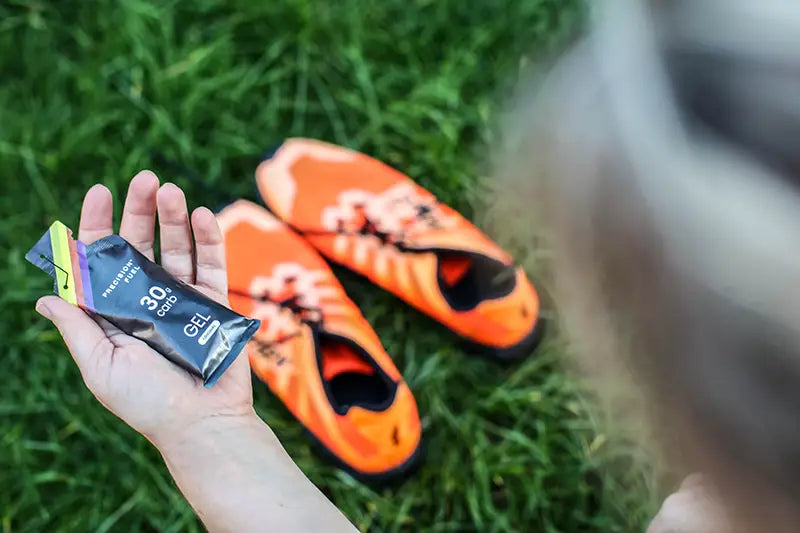
PF30 gel in front of running shoes.

Turn one part of the guide into a plan

Build the product sequence once the course is clear

When the organiser, course and access decisions are settled, use Fuel Finder to turn them into a practical product starting point for the event.

  1. Describe the event Duration, intensity, terrain, temperature and support shape what is practical.
  2. Set your preferences Choose familiar gels, chews, bars or drink mixes, your caffeine preference and the aid you can rely on.
  3. Rehearse the result Test quantities, timing, taste, opening and carrying in relevant training.

Common questions

Endurance race preparation questions

General guidance for healthy adults. Event rules and individual medical advice take priority.

What if I sleep badly the night before the event?

Keep the rest of the morning familiar. A poor final night is common around competition. Avoid chasing it with an unfamiliar supplement, an excessive caffeine dose or a new breakfast. If you are unwell or too impaired to participate safely, do not ignore that signal.

Is this guide a mandatory-kit list?

No. It explains how to build one. Only the current organiser document for your exact event, distance and announced conditions can tell you what is mandatory. Check it again close to the start.

How should I change the plan if the forecast turns hot?

Follow event advice and adjust pacing, clothing, cooling, fluid access and carrying within a range already tested. Do not assume that more fluid or sodium is always better. People with medical concerns or previous heat illness should seek individual advice.

Which cycling spares should I carry?

Start with the bike and route: a compatible puncture repair, inflation method, tyre levers where appropriate, multitool and chain repair. Add a quick link, valve core, tyre boot, tape, spare cleat bolts or lights only when they match the distance, solve a plausible problem and are items you can use.

When should I stop testing the race-day nutrition plan?

The final relevant training sessions should confirm the plan, not start it. By race week, products, concentrations, timing and carrying should already be familiar. Use late changes only when rules, availability, health or conditions genuinely require them.

Sources and further reading

Check the evidence and the rules

These links go to peer-reviewed consensus work, recognised sporting organisations and current event organisers. Event-specific sources are examples of why a generic checklist cannot replace the rules for your own race.

  1. Sleep and the athlete: expert consensus recommendations British Journal of Sports Medicine, 2021

    Individual sleep needs and the competition, travel, stress and anxiety factors that can disturb athlete sleep.

  2. Managing travel fatigue and jet lag in athletes Sports Medicine, 2021

    Consensus framework for travel fatigue, circadian disruption and individual planning.

  3. Nutrition for athletics consensus statement International Association of Athletics Federations, 2019

    Competition nutrition across pre-event, within-event and between-event contexts.

  4. Beat the Heat in World Athletics road races World Athletics, Current resource checked 2026

    Preparation, acclimatisation, hydration and cooling for endurance competition in heat.

  5. 2026 regulations UTMB Mont-Blanc, 2026

    Current example of organiser-controlled mandatory equipment, weather additions, checks and penalties.

  6. Winter Downs 100 2026 information pack Centurion Running, 2026

    A current event-specific example covering waterproofs, lights, batteries, layers, medical kit, repair kit and emergency food.

  7. Sportive: preparing your bike British Cycling, Current guidance checked 2026

    Pre-event bicycle checks and practical puncture, inflation, multitool and chain-repair preparation.

  8. 2026 competition rules IRONMAN, Effective 2 March 2026

    Current triathlon rules and equipment requirements; the event-specific athlete guide still takes priority.