Hybrid event fuelling

Fuel the work without making the stations harder

A hybrid event asks you to run, lift, carry, push and repeat, often with only brief chances to eat or drink. Build your plan from the expected duration, organiser rules, station access and what your gut already tolerates. The biggest number is not automatically the best plan. Look for the smallest reliable system that keeps useful carbohydrate and fluid available without getting in the way of the next station.

Hybrid athlete controlling effort during a functional fitness event

The short answer

Start with duration. Let access and tolerance decide the rest.

Updated 29 July 202613 minute read

Begin with a familiar pre-event meal and arrive normally hydrated. For an event lasting about 45 to 75 minutes, carbohydrate during the event may be unnecessary or limited to a small familiar amount. For stop-start work lasting about one to two and a half hours, 30 to 60 grams of carbohydrate per hour is a recognised evidence-led range, but it is something to test rather than a compulsory target. Check where eating or drinking is actually allowed, choose a gel, chew or drink you can use without disrupting your breathing or grip, practice it in representative training and keep hydration separate when conditions demand more fluid than fuel.

Ready-made fuel packs

A starting point for longer hybrid events

Use the 2-hour pack as a practical starting point, then adjust it to your expected duration, access and tolerance. Shorter events may need less.

Explore all Fuel Packs

Loading available fuel packs…

Six decisions

Six decisions for a plan that survives the event

Start with the event and its access rules, then settle the food, drink and recovery decisions in order. Choose the product only when you know the job it has to do.

Start with the event

Map the work and the moments when fuel is possible

Hybrid fuelling is a logistics problem as much as a nutrition problem. The same carbohydrate target may be easy on a long run with a bottle and awkward in a crowded indoor event with fixed stations. Build the event map before you choose the product.

Write down the expected start time, moving-time range, warm-up window, likely temperature, run and station sequence, drink access, personal-carry rules and the last sensible point for food. If the website, entry email and technical briefing disagree, ask the organiser instead of guessing.

Duration

Plan for your likely moving time, not your dream finish

Use recent comparable training and the event structure to write a realistic range. Include likely station queues, transition distance and any time spent waiting for equipment. A plan for 55 minutes can look very different from one for 95 minutes, even when both events carry the same name.


Intensity

Find the brief moments when you can swallow properly

Running and hard stations raise your breathing rate and can make chewing or taking a concentrated gel uncomfortable. Mark the calmer windows where you can slow for a few seconds, swallow safely and use water if needed. Don't plan to eat while carrying, pushing or moving under load.

Rules

Check what you can carry and where help exists

Open the current organiser rulebook, athlete guide and venue briefing. Confirm whether personal bottles, gels, belts or outside assistance are allowed, where aid is positioned and whether you can leave anything in a transition area. Rules and venue flow can change between organisers, seasons and locations.

Individual

Treat your own tolerance as a real limit

Record the carbohydrate amount, fluid volume, caffeine dose and product used in representative sessions, along with any nausea, reflux, bloating or urgent toilet symptoms. A published range can't tell you what your gut will accept at race intensity. Persistent or severe symptoms deserve qualified medical or sports-dietetic advice.

Weights and functional training equipment arranged for a hybrid session
Your event map should show where fuel is possible, not only where the effort is hardest.

Duration first

Find the starting range before you choose the product

These are planning categories, not a diagnosis or a performance promise. The Australian Institute of Sport places brief exercise below 45 minutes in a no-carbohydrate-needed category, recognises small amounts for sustained high-intensity work around 45 to 75 minutes and gives 30 to 60 grams per hour for endurance and stop-start sport lasting roughly one to two and a half hours.

Start conservatively, practice the product choice and adjust from evidence you collect in training.
ScenarioStarting pointUseful optionAvoidNext decision
Under about 45 minutesNormal pre-event eating and hydration usually do the main workWater only if wanted and availableAdding fuel because other athletes carry itProtect the familiar pre-start routine
About 45 to 75 minutesSmall amounts of carbohydrate may help some athletesA familiar drink or small portion that is easy to useConcentrated intake immediately before a hard stationTest whether any during-event intake improves the plan
About 1 to 2.5 hours30 to 60 g carbohydrate per hour is an evidence-led range for stop-start sportDrink, gel with water, chew or another tested combinationTreating the upper end as a compulsory targetTurn the hourly range into two or three usable windows
Multiple events or heatsReplace carbohydrate and fluid between efforts according to the gapFamiliar low-fibre food, drink and a normal meal when time allowsOne large recovery feed too close to the next startWrite the between-round timetable before travel
Hot, humid or unusually long conditionsFluid demand may rise independently of carbohydrate demandSeparate water or electrolyte fluid from concentrated fuel where usefulForcing fluid beyond thirst and the practiced planRehearse the exact combination in comparable conditions

On a phone, swipe the table sideways to compare every column. Verify current organiser rules before relying on personal carry or aid.

Before the start

Arrive fuelled without turning the warm up into a digestion test

Your pre-event plan should remove urgency. It gives you a familiar meal, one clear top-up decision and enough time to reach the venue, check in and warm up without carrying a heavy stomach.

If you have diabetes, a history of disordered eating, significant gastrointestinal illness, food allergy, medication interactions or another medical condition that changes your eating or fluid needs, seek individual advice instead of adapting a generic event guide.

Day before

Eat enough before the event day begins

Don't arrive after a day of accidental restriction because travel, nerves or a late weigh-in pushed out your normal meals. Use familiar carbohydrate-rich food across the day, include normal protein and fluids, and avoid turning the evening meal into an oversized digestion test.

Pre-event meal

Choose a familiar meal and give it time

Base the meal on foods you already use before quality training. Keep fibre, fat, spice and portion size within your normal tolerance. The right timing varies with the start time, your appetite and the meal, so practice the gap instead of treating a universal three-hour rule as exact.

Final hour

Use a top-up because it solves a known problem

A compact carbohydrate option can help when the main meal was early, the start is delayed or nerves limit your appetite. Keep it familiar and small enough to sit comfortably through the warm up. More is not automatically better, especially before burpees, sled work or loaded carries.

Caffeine

Count every source and protect your sleep

Check the labels on coffee, gels, drinks and pre-workouts so separate products do not create an unintended total. Caffeine is optional, not a requirement. Consider your sensitivity, medication, anxiety, late start times and sleep. The first trial belongs in training, not in the event pen.

Three athletes running together during a familiar pre-event session
Practice the meal, timing and warm up together before race week.

During the event

Make every intake simple enough to use while racing

A useful during-event plan fits on one line: what, how much, where and what happens if the window disappears. It should work with the event instead of demanding attention that belongs on movement standards, course flow or safety.

For longer hybrid events, use the hourly range as arithmetic, then turn it into the real event. A 90-minute target of 30 to 60 grams per hour becomes 45 to 90 grams in total, but the upper end is not automatically right for you. Start with what you have practiced at a comparable intensity.

Window

Use the calmer transitions

Choose a moment after your breathing has settled enough to swallow safely and before the next hard station begins. A few deliberate seconds are more reliable than trying to save time while coughing, gripping equipment or moving through a congested lane.

Dose

Turn the total into portions you can use

If your plan calls for 40 grams across an event, that may mean two small portions instead of one concentrated hit. Read the current label because gels, chews and drink mixes do not all provide the same carbohydrate per serving. Mark the package or bottle when you will use only part of it.

Water

Know whether your gel needs water

Most concentrated gels are intended to be taken with water; a small number are specifically made otherwise. Drinking enough to swallow doesn't complete your full hydration plan. Carbohydrate and fluid are connected decisions, but you may still need different amounts of each.

Fallback

Decide what to do when the planned window disappears

If an aid point is absent, a queue is longer than expected or you lose a carried item, don't automatically double the next intake. Return to the time remaining, your symptoms and the water available. A slightly lower total may be safer than forcing an untested concentrated dose.

Hybrid athlete moving between running and a functional station
Your plan needs to survive heavy breathing, transitions and the real venue flow.

Access and fuel choices

Choose the gel, chew or drink by the job it needs to do

There isn't a gel, chew or drink that is universally fastest or gentlest. Compare carbohydrate per serving, fluid requirement, packaging, caffeine, texture, opening method and the window you have in the event. The current product label is the source of truth for ingredients and serving information.

Don't use the event to test a new flavour, concentration, caffeine dose or sweetener. If a product repeatedly produces symptoms in representative training, extra determination on race day is not the answer.

Drink

Useful when fuel and fluid can move together

A carbohydrate-electrolyte drink can spread your intake across smaller sips and may be easier than opening packaging. The trade-off is carrying it or relying on aid access. Concentration matters: extra powder can make the bottle harder to tolerate rather than simply more effective.

Gel

Compact, measurable and normally used with water

A gel is useful when you need a known carbohydrate portion in very little space. Check whether it contains caffeine or meaningful sodium and follow the fluid directions. You still need to open, swallow and dispose of it within the rules and the transition available.

Chew

Smaller portions, but more chewing

Chews can be divided across the event, which may suit athletes who prefer smaller doses. They also need chewing and can feel awkward with a dry mouth or high breathing rate. Practice that exact texture after running and before grip-heavy stations.

Everyday food

Useful around the event, not necessarily during it

Familiar low-fibre foods can work well before an event or between heats. During a short, intense hybrid race, carrying, chewing and digesting them may be less practical. Sports foods are tools for specific situations, not replacements for the nutrient-dense meals that support your wider training week.

Athlete carrying a compact energy gel during a hard training session
A compact product is useful only when it fits the event and the athlete.

Gut and hydration

Practice the whole routine, not just what reaches your stomach

Gut training means repeated, progressive practice with carbohydrate during exercise. It is not a last-week challenge to consume the largest possible dose. A 2024 systematic review found potentially favourable effects from carbohydrate gut training and some short-term dietary strategies, while also showing that the evidence and individual response vary.

Your hydration needs can move independently from your carbohydrate needs. Hot conditions may call for more fluid without more fuel. A concentrated gel may add carbohydrate without providing enough fluid. Build the two lines of the plan together and test the combination.

Rehearse

Practice at a representative intensity

An easy jog doesn't recreate the breathing, impact and abdominal pressure of running into sleds, lunges or carries. Test the plan inside a controlled session with similar duration and transitions, while keeping the purpose of the training intact.

Progress

Change one thing, then repeat the test

Increase the carbohydrate amount, fluid concentration or caffeine separately so you can understand the response. Record the product, dose, timing, water, conditions, perceived effort and symptoms. Repetition can improve confidence and may improve carbohydrate tolerance, but it isn't a reason to ignore warning signs.

Hydration

Avoid arriving short of fluid or forcing too much

Arrive normally hydrated and use your training observations, the conditions, access and thirst to shape the plan. Individual sweat rate can help in longer or hotter work, but replacing every gram lost is not a universal requirement. Excessive fluid intake can be dangerous as well as uncomfortable.

Stop

A serious symptom is not a fuelling puzzle

Chest pain, fainting, confusion, severe breathing difficulty, repeated vomiting or a significant acute injury are not problems to solve with a gel or drink. Stop and seek event medical help. Persistent gastrointestinal symptoms, unexplained weight change or concern about low energy availability should be discussed with an appropriate clinician or sports dietitian.

Track markers used to structure a repeatable hybrid training rehearsal
Repeat the same plan in controlled sessions before you change the dose.

Worked plan and recovery

Your plan doesn't finish at the line

Recovery depends on what comes next. A multi-heat day, a long drive home and a rest day do not need the same response. Decide before the event where food and fluid will come from, particularly when the venue options are uncertain.

For tested athletes, supplements also carry an anti-doping decision. UK Anti-Doping states that no supplement can be guaranteed free of prohibited substances and advises athletes to assess the need, risk and consequences, including checking the actual batch instead of relying on a brand-level claim.

First

Finish first, then decide what you actually need

Cool down, collect your belongings, follow the organiser flow and notice heat, nausea or injury before forcing food. If another heat is close, the gap creates the urgency. If you do not train again until tomorrow, your next normal meal can often do most of the recovery work.

Carbohydrate

Replace what the next demand calls for

Carbohydrate supports glycogen restoration, especially when another demanding effort follows soon. Use something easy and familiar when your appetite is low, then return to normal meals. Don't let a recovery drink push out the rest of the day's food by default.

Protein

Include a normal serving of high-quality protein

Protein supports repair across the training week, but crossing the finish does not create a ten-minute deadline. Include a familiar serving in your next snack or meal. The whole day and consistent training nutrition matter more than a dramatic recovery ritual.

Review

Write down what changed after halfway

Record the actual duration, intake, water access, stomach comfort, energy, concentration and anything left unused. Separate pacing errors from nutrition errors where you can. One honest review is more useful than copying a new plan from the fastest athlete in the results.

Hybrid athlete controlling the final repetitions of a functional station
Review the whole event before deciding whether the fuel, pacing or access needs to change.

Worked example

A simple plan for a practiced 85-minute event

This example assumes you have used the meal, top-up and during-event portion in representative training; the organiser permits the chosen carry method; water is available; and no medical condition changes the plan. It is a decision aid, not a prescription.

The useful part is the sequence and fallback, not the specific product.
WindowFuel decisionFluid decisionAvoidCheck
Three to four hours beforeFamiliar meal used before quality trainingNormal fluid with the mealLarge experimental meal or new supplementConfirm travel, check-in and start time
Thirty to sixty minutes beforeOptional familiar carbohydrate top-up if the meal was earlySmall familiar drink according to thirst and planUnplanned caffeine stackingBegin the practiced warm up
Early eventSettle pace and use no intake unless the rehearsed plan calls for itUse permitted water accessFuel while breathing is uncontrolledProtect the next station
Mid to late eventUse the pre-written portion in a calm transitionTake required water and reassess conditionsDouble intake after a missed windowReturn to pacing and movement standards
After the finishFamiliar carbohydrate and protein according to the next demandReplace fluid gradually without forcing excessTreating serious symptoms as ordinary fatigueRecord actual intake and response

On a phone, swipe the table sideways. Replace every example with your tested quantities and the current event rules.

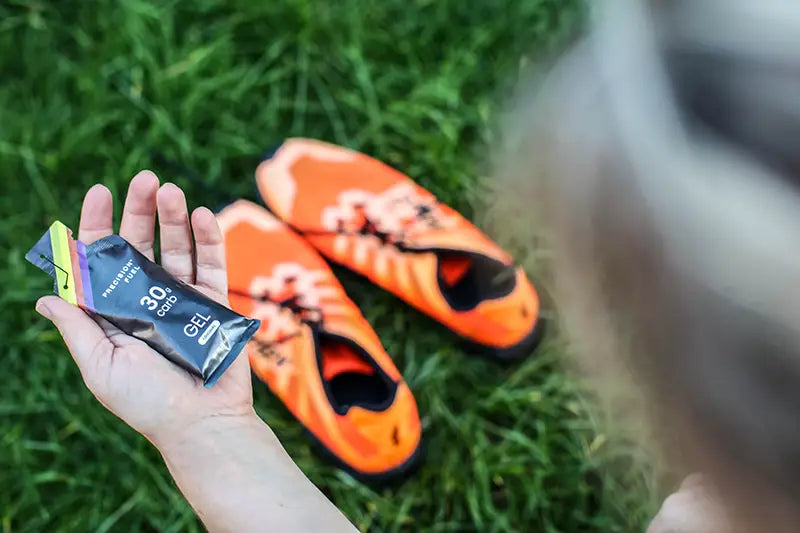
PF30 gel in front of running shoes.

Turn the event map into a starting point

Use Fuel Finder once duration, access and tolerance are clear

Add the expected duration, intensity, experience and conditions, then compare a practical fuel and hydration starting point. Return to the organiser rules, current labels and your own training notes before deciding what to carry.

Choose only after the plan is clear

Compare gels and drinks with a specific job in mind

Read the current product label and check availability before you buy. Choose a gel or drink because it fits a plan you have practiced. No product replaces a familiar pre-event meal, organiser rules, representative training or individual medical and nutrition advice.

Energy gels

Compact, measured carbohydrate for a plan with a suitable water and access window.

Compare current energy gels

Energy and hydration drinks

Useful when your event or training setup lets you plan fuel and fluid together.

Compare current drink mixes

Common questions

Practical answers for your event plan

Use these as starting points, then return to the current organiser rules, product labels and your own training evidence.

Do I need a gel during a HYROX or hybrid event?

Not automatically. Start with the expected duration, pre-event eating, organiser rules, water access and what you have tested. Shorter events may need no during-event carbohydrate. For longer stop-start events, a gel can be one practical way to reach a tested carbohydrate range, but concentrated gels usually need water and must fit a safe transition.

How many carbohydrates should I take during a hybrid race?

For stop-start sport lasting about one to two and a half hours, 30 to 60 grams per hour is a recognised evidence-led range. It is not compulsory for every athlete. Turn the range into total event grams, then split it into portions you can access and tolerate. Use representative training and qualified advice when needed.

Should I use a sports drink or water?

Choose according to your separate fuel and fluid needs. A sports drink can supply both, while water lets you pair fluid with a gel, chew or pre-event food. Heat may raise fluid need without raising carbohydrate need. Check the drink concentration, current label, event access and your own response instead of assuming one option is always better.

What should I eat before an early hybrid event?

Use a familiar carbohydrate-rich meal or snack that you have tolerated before quality training, with normal fluid and enough time to digest. Practice the portion and timing during training. If your appetite or the early start makes a full meal difficult, use a smaller familiar meal and a tested top-up instead of improvising on event morning.

How do I stop gels upsetting my stomach?

Check whether the gel should be taken with water, start with a tolerable amount, avoid changing several things at once and practice at a representative intensity. Record the symptoms and exact product, dose, water and timing. Persistent, severe or unexplained symptoms should be discussed with an appropriate clinician or sports dietitian instead of managed only by swapping products.

Sources and further reading

Check the evidence and the current event rules

RSG used current organiser material, authoritative sport-nutrition guidance and peer-reviewed research. External guidance informs the framework; it does not replace individual medical or sports-dietetic advice.

  1. Official HYROX rulebook page HYROX, Accessed 29 July 2026

    Current organiser route for competition rules. Athletes should also check their event-specific athlete guide and technical briefing.

  2. Official HYROX Singles Rulebook HYROX, Current file accessed 29 July 2026

    Current official singles sequence, participation, venue process, movement standards and penalties linked from the rulebook route.

  3. Sports drinks: how and when do I use it? Australian Institute of Sport, Accessed 29 July 2026

    Authoritative duration-based carbohydrate ranges, stop-start sport context, fluid and fuel separation, and gut-training guidance.

  4. Sports gels Australian Institute of Sport, Accessed 29 July 2026

    Practical gel composition, water, dose, tolerance, dental, caffeine and food-first considerations.

  5. Nutrition for Athletics consensus statement World Athletics, 2019

    Periodised food-first nutrition, competition carbohydrate and fluid, recovery, low energy availability and individual planning.

  6. Carbohydrate and dietary strategies for exercise-related gastrointestinal symptoms Nutrients systematic review, 2024

    Current systematic review of carbohydrate gut training and dietary approaches, with useful evidence boundaries.

  7. Fluid replacement for the physically active National Athletic Trainers' Association, 2017

    Individual fluid planning, sweat-rate context and risks from both inadequate and excessive intake.

  8. Managing supplement risks UK Anti-Doping, Accessed 29 July 2026

    Strict liability, need and risk assessment, actual-batch checking and the limits of supplement safety claims.